The two seasons
Botswana has a dry season (May to October) and a wet/green season (November to April). There is no gradual transition: the rains arrive, the landscape transforms, and the safari experience changes completely.
Dry season: May to October
This is when most people visit, and for good reason. As water sources shrink, wildlife concentrates around rivers and permanent water holes. Game viewing is at its best. The bush is open (no tall grass blocking views), and the weather is pleasant: warm days, cool nights, almost zero rain.
May: The last rains dry up. Roads are drying and becoming passable. Good wildlife but not yet peak. Fewer tourists and lower prices. A sweet spot.
June to July: Prime time begins. The Okavango flood waters arrive from Angola, creating the high-water season in the Delta. Roads are dry. Nights can be cold (close to freezing in the Kalahari). Wildlife gathering around water intensifies.
August to September: Peak season. The best wildlife viewing of the year. Elephants gather in massive herds at Chobe. Predator activity is high everywhere. Campsites are fully booked months ahead. Prices are at their highest.
October: The dry season's last gasp. Temperatures rise sharply (40+ degrees in the Kalahari). Wildlife is concentrated but the heat is intense. First storms may appear late in the month. Great value if you can handle the heat.
Green season: November to April
The rains transform Botswana from brown to green. Many roads become impassable, particularly in Moremi and Savuti. But the green season is not a write-off: it offers a completely different experience.
November to December: The rains begin. Roads deteriorate quickly. Birdlife explodes as migratory species arrive. Newborn animals appear. The landscape is lush. Many campsites in Moremi and Savuti close.
January to March: Peak rainy season. The Makgadikgadi zebra migration peaks (February to March). Flamingos arrive on the flooded pans. The Central Kalahari comes alive with game. Very few self-drivers on the road.
April: The rains taper off. Roads begin to dry. A transitional month that can offer excellent conditions: green landscape, migrating wildlife, improving roads, and very few tourists.
Our recommendation for self-drivers
For your first Botswana self-drive: June or September. June offers the start of peak wildlife with fewer crowds. September offers peak wildlife with the roads at their driest and most passable.
For experienced self-drivers looking for something different: February to April in the Makgadikgadi and Central Kalahari. The zebra migration, birdlife, and green landscape are extraordinary, and you will have the bush almost entirely to yourself.
Match the season to what you want to see
The best month depends on what sits at the top of your list. Use these priorities as a guide:
- Big predator sightings: August and September in Moremi, Savuti, and Chobe. Prey concentrates at shrinking water, and lions, leopards, and wild dogs hunt around it.
- Massive elephant herds: September and October along the Chobe riverfront, when hundreds gather at the only water for miles.
- The zebra migration and newborns: January to March in the Makgadikgadi and Central Kalahari, when the rains bring fresh grass.
- Birding: November to March, when migratory species arrive and resident birds are in breeding plumage.
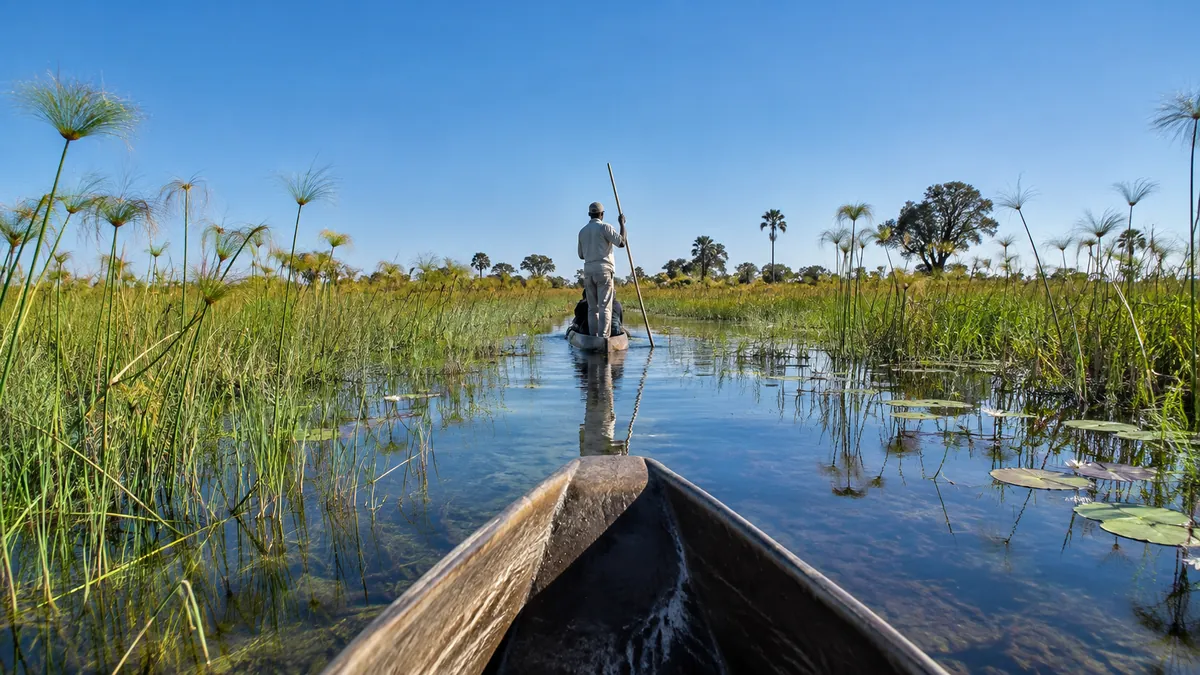
- Okavango high water and mokoro trips: June to August, when the Angolan flood pushes through the Delta.
Temperature and what to pack by month
Botswana swings between cold nights and fierce daytime heat depending on the month, and packing for the wrong one ruins the experience.
June to August (winter): Warm, dry days around 25 degrees, but nights drop close to freezing in the Kalahari and single digits in the north. Pack a warm jacket, beanie, and gloves for early game drives, alongside shorts and shirts for midday.
September to October (hot, dry): Daytime temperatures climb past 35 degrees and reach the low 40s in the Kalahari by late October. Light, breathable clothing, a wide-brimmed hat, and far more drinking water than you think you need.
November to April (green, wet): Hot and humid with afternoon storms. Quick-drying clothes, a light rain layer, and strong insect repellent, as this is the higher-risk malaria period.
How the season changes the driving
Season is not only about wildlife; it decides which roads you can use. In the dry months the sand tracks of Moremi, Savuti, and Khwai are firm enough to drive with standard 4x4 technique. From December the rains turn black-cotton soil near the pans into a trap and flood low-lying tracks, and several DWNP campsites close because access becomes unreliable. If you are set on the northern circuit, the dry season is the safe choice. The green season rewards experienced overlanders who carry proper recovery gear and accept that some routes will be impassable.
How the season changes cost and crowds
Peak dry-season months carry peak prices and the fullest campsites, with Moremi and Savuti booking out six months to a year ahead. The green season brings vehicle rental rates down by 20 to 30 percent and makes campsites far easier to secure. The shoulder months of May and late April offer the best balance for many travellers: drying roads, thinning crowds, lower prices, and still-strong wildlife.
Quick season picker
If you want the simplest answer: choose September for a classic first self-drive with the best wildlife and the driest roads. Choose June for strong wildlife with fewer people. Choose February to March if you are an experienced overlander chasing the Kalahari and Makgadikgadi green-season spectacle with the bush to yourself.
The Okavango flood, explained
One of Botswana's quirks catches many first-timers out: the Okavango Delta is at its fullest during the dry season, not the wet one. The water comes from rains that fell in the Angolan highlands months earlier, pushing slowly south and arriving in the Delta around June to August. So while the land around you is dry and the bush is thinning, the Delta channels are brimming, which is exactly when mokoro trips and water-based activities are at their best. If a Delta water experience is a priority, aim for the June to August window rather than the rainy months.
Photography and light by season
Season shapes your images as much as your sightings. The dry months deliver clear skies, golden early and late light, and dust that turns sunsets deep orange, with animals framed cleanly against open, leafless bush. The green season gives you dramatic storm skies, saturated colour, and reflective water, but also harsher midday light and foliage that can hide wildlife. For classic wildlife portraits with animals easy to see, the dry season wins. For moody landscapes and lush scenes, the green season is unmatched.
Shoulder season in depth
The shoulder months of May and late April deserve more attention than they get. In May the last rains have gone, the bush is still green from the wet season but thinning enough to see through, roads are drying and passable, wildlife is good and building toward peak, and both prices and crowds are well below the July-to-September rush. Late April offers a similar balance as the rains taper. For travellers who want strong conditions without peak-season cost and congestion, these windows are arguably the best value of the whole year.
Keeping the wildlife while avoiding the crowds
Peak dry season has the best concentrated wildlife but also the fullest campsites and the most vehicles at sightings. You can soften that without giving up the game viewing. Travel in June or very early July rather than August and September and you get most of the wildlife benefit with noticeably fewer people. Favour Khwai and the less-visited corners of Moremi over the busiest hotspots. And since you are self-driving, simply starting your day earlier than the crowd often gives you a prime sighting to yourself before anyone else arrives.