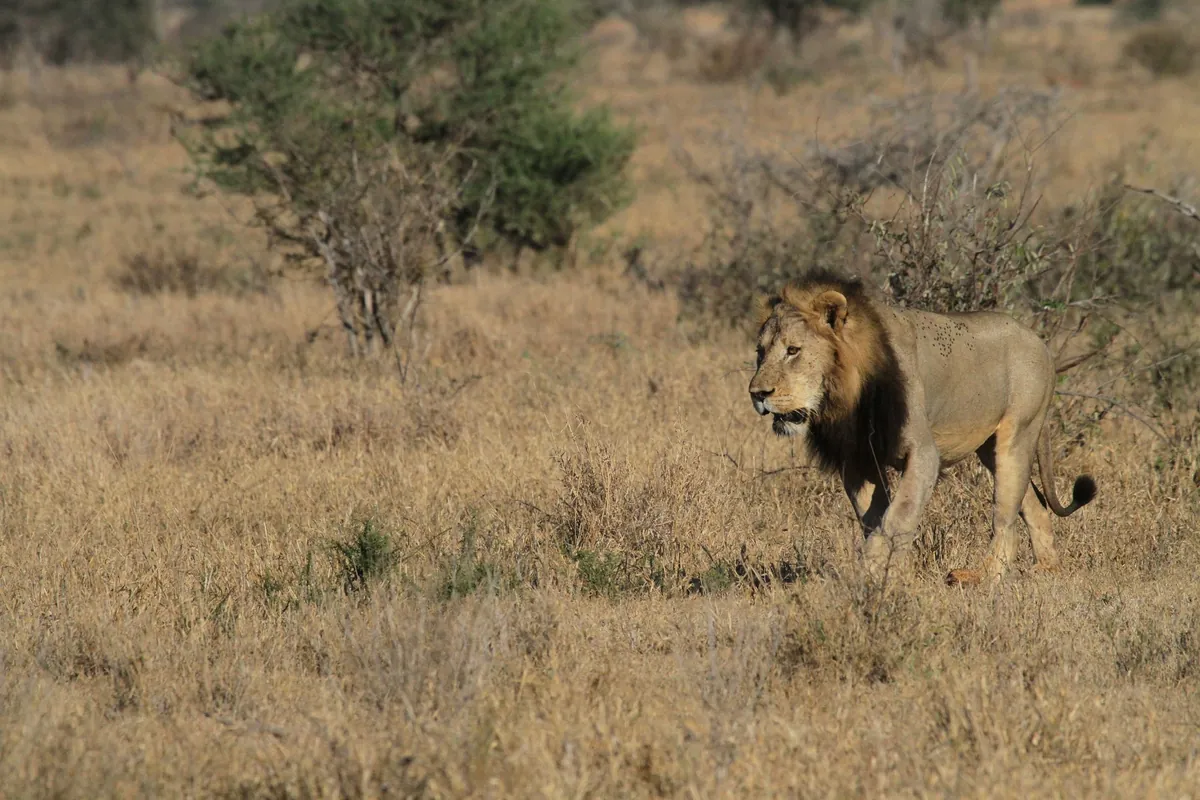
Moremi Game Reserve covers the eastern portion of the Okavango Delta and is widely regarded as one of the finest wildlife reserves in Africa. Unlike the rest of the Delta, which is privately controlled concessions accessible only by air or expensive boat transfers, Moremi is publicly managed and accessible by self-drive vehicle. That makes it the only part of the Okavango Delta system that a self-driver can experience directly. That access is the whole appeal. A flying safari into a private Delta concession can cost several thousand dollars for a few nights. Moremi delivers much of the same wildlife, the same channels and lagoons, and the same density of predators for the price of a park fee and a campsite. The trade is effort: you drive the sand yourself, you set up your own camp, and you carry everything in and out.
What makes Moremi Game Reserve special
Moremi sits at the intersection of the Delta's permanent water system and the dry Kalahari sandveld. This creates an extraordinary range of habitats within a relatively small area: floodplains, mopane woodland, riverine forest, lagoons, and dry savanna. The result is exceptional species diversity.
The predator viewing in Moremi is among the best in Africa. Wild dog packs are regularly sighted, lion prides work the floodplain edges, and the riverine forests around Third Bridge and Xakanaxa hold some of Botswana's most reliable leopard sightings. The birding is world-class, with over 500 recorded species.
The reserve rewards patience over distance. Because the wildlife is dense, slow driving along the floodplain edges around Xakanaxa and Third Bridge often produces more than covering big mileage. Early starts matter: predators are most active in the first two hours after the 6am gate opening, and the light through the riverine forest at that hour is exceptional for photography.
Self-drive suitability
Moremi is not for beginners. The tracks are deep sand throughout, water crossings are common (some require driving through water up to bonnet height), and navigation can be confusing where multiple tracks diverge. Getting stuck is a normal part of the experience, not an exception.
The section between South Gate and Third Bridge is the most commonly driven and the most accessible of the difficult routes. The Xakanaxa area adds another level of challenge with narrower tracks and more water crossings. The Mboma Loop is a spectacular drive through island-studded floodplains but requires careful attention to track conditions.
If you have not driven in deep sand before, Moremi is not the place to learn. Consider starting with Chobe or Makgadikgadi to build experience, or book a supported self-drive trip where a guide vehicle accompanies you.
The water crossings deserve specific caution. Before driving through any pool, walk it first where it is safe to do so, or watch another vehicle cross, and gauge the depth and the firmness of the bottom. The crossing at Fourth Bridge is notorious for swallowing vehicles that enter too fast or in the wrong gear. Engage low range, pick a steady pace, and keep moving. A snorkel protects your engine if you misjudge the depth.
Best time to visit Moremi Game Reserve
June to October is the recommended self-drive window. By June, the flood waters from Angola have typically reached the Delta, creating the high-water season that Moremi is famous for. Water crossings are at their most dramatic but roads are generally passable.
July to September is peak season. Wildlife concentrates around the permanent water, predator activity is high, and the dry conditions make game easier to spot in the bush. Campsites book out months in advance.
November to March is the green season. Rains make many tracks impassable, and several campsites close. Only experienced overlanders should attempt Moremi in the wet season.
Flood timing varies year to year, so check recent conditions before committing to specific campsites. In a strong flood year the Mboma area and parts of the Xakanaxa road can be cut off entirely, while a weak flood leaves the crossings shallow and easier. Operators in Maun track water levels closely and are the best source of current information in the weeks before you travel.
Vehicle requirements
A fully equipped 4x4 is non-negotiable. You need low-range gearing for deep sand, high clearance for water crossings, and a snorkel is strongly recommended. The standard Toyota Hilux with rooftop tent from a Maun-based operator is the right vehicle.
Carry two spare tyres (thorns from camel-thorn trees are a constant threat), a high-lift jack, a compressor, and tow straps. A maxtrax or sand ladders are worth their weight in Moremi.
Tyre pressure management is the single biggest factor in getting through comfortably. Drop your pressures to around 1.2 to 1.4 bar for the deep sand sections, and reinflate before any faster gravel. A quality compressor pays for itself here. Carry a tyre repair kit too, because camel-thorn punctures are common and you may use both spares on a longer trip.
Wildlife highlights
Moremi's wild dogs are the star attraction. The reserve supports several packs, and sightings are most common in the early morning and late afternoon around Third Bridge and the Mboma Loop area. If wild dogs are on your list, Moremi is where to come.
Lion prides are large and active. The open floodplain areas near Xakanaxa are prime territory. Leopards favour the dense riverine forest along the channels, particularly around Third Bridge. Elephant and buffalo herds move through the reserve in large numbers, especially during the dry season.
The Xakanaxa Lagoon area offers excellent birding, including African fish eagle, Pel's fishing owl (rare and highly sought-after), and malachite kingfisher.
Time of day shapes what you see. Wild dogs hunt in the cool of early morning and late afternoon, often covering ground fast, so a sighting can end quickly. Leopards rest in the shade through the middle of the day and become active towards dusk. The hippo pools near Third Bridge stay reliable throughout the day, and the bridge itself is a classic spot to watch the channel while you wait for traffic to clear.
Practical information
The three main campsites in Moremi are Third Bridge, Xakanaxa, and South Gate. All must be booked through the DWNP system. Third Bridge is the most popular and books out first. It sits on a wooden bridge over a channel and offers superb wildlife right in camp, including hippos that graze between the tents at night.
Xakanaxa has beautiful lagoon views and is the base for mokoro excursions deeper into the Delta. South Gate is the entry point from Maun and serves as a first or last night stop.
There is no fuel, no shops, and no phone signal inside Moremi. Carry everything you need and bring a satellite communicator for emergencies. Water can be filtered from the Delta channels in an emergency, but carry at least 40 litres per person.
Plan your campsite sequence to match your route. Most self-drivers enter at South Gate, spend a night there or push to Third Bridge, then move to Xakanaxa before exiting via North Gate towards Khwai. Booking the sites in that geographic order avoids backtracking across the reserve. Arrive at each camp with enough daylight to set up, as you must be off the tracks and into camp before the gates close at 6:30pm.
Getting there
From Maun, the South Gate is approximately 100 kilometres via a mix of gravel and deep sand track. The drive takes 3 to 4 hours depending on sand conditions. The turn-off from the tar road is signposted, but the tracks are not always clearly marked after that.
From Kasane/Chobe, the route through Savuti is approximately 370 kilometres on deep sand tracks and takes a full day. Most itineraries approach Moremi from Maun via South Gate.
The tracks inside Moremi are not reliably signposted, and GPS with Tracks4Africa mapping is close to essential. Junctions multiply where vehicles have made detours around wet patches, and it is easy to follow a fading track into a dead end. Carry a paper backup and note the direction of travel between camps before you set off, as phone signal disappears entirely once you pass South Gate.
Budget realistically for the driving inside the reserve. Distances between camps look short on a map, but deep sand, water crossings, and the temptation to stop for every sighting mean you should plan on an average of around 15 to 20 kilometres an hour. A move from Third Bridge to Xakanaxa that measures 40 kilometres can easily absorb half a day once you factor in game viewing and a cautious approach to the crossings. Treat every transfer as a game drive rather than a commute, start early, and you will rarely feel rushed to beat the gate closing time.