Camping in Botswana
Cost: $5 to $40 per site per night (government and community campsites)
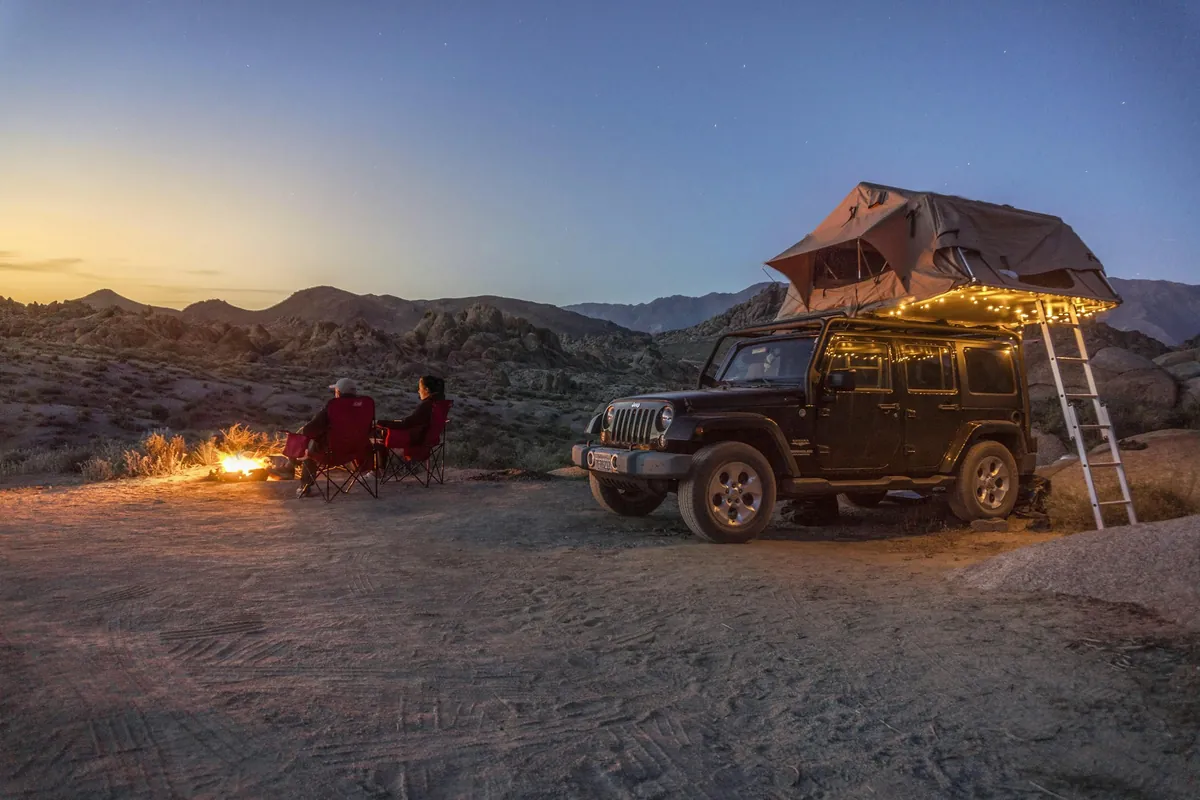
Camping is the authentic self-drive safari experience. You set up your rooftop tent at an unfenced campsite in the middle of a national park, cook over a fire, and fall asleep listening to lions roaring and hippos grunting.
Government campsites in Moremi, Chobe, and Savuti are basic: a cleared site, a fire pit, and pit toilets. Some have cold showers. There is no electricity, no shop, and no staff. You are completely self-sufficient.
Community campsites in areas like Khwai offer slightly more infrastructure (some have hot showers and basic ablution blocks) for a higher price.
Lodges in Botswana
Cost: $150 to $600+ per person per night (self-drive accessible lodges)
Lodge stays offer a different experience: guided game drives, comfortable beds, hot meals, and often a pool. For self-drivers, the catch is that many of Botswana's famous lodges are fly-in only and not accessible by road.
The lodges you can reach by self-drive vehicle are generally outside the parks, in places like Kasane, Maun, Gweta (Makgadikgadi), and along the A3 highway. Inside the parks, camping is usually the only option.
Our recommendation
Most self-drive travellers do a mix. Camp inside the parks (Moremi, Savuti, Chobe) for the full bush experience, then book a lodge night in Kasane or Maun for a hot shower, a real bed, and a restaurant meal between legs of the trip. This keeps costs down while giving you the best of both worlds.
The real cost difference over two weeks
For a couple on a fourteen-night trip, the gap is large. Camping government and community sites at roughly 20 to 40 US dollars a site per night totals a few hundred dollars for the whole trip. Self-drive-accessible lodges at 150 to 600 dollars per person per night turn the same two weeks into many thousands. This is why most self-drivers camp for the bulk of the trip and treat a lodge as an occasional luxury rather than the default. The vehicle, fuel, and park fees are the same either way, so accommodation is the single biggest lever you control on total cost.
What a night of camping actually looks like
You arrive mid-afternoon, pick a spot, and pop the rooftop tent, which takes a couple of minutes. You gather firewood, get a fire going, and cook dinner as the light drops. There is no fence, no staff, and no other sound but the bush. Elephants may feed through the site, hippos grunt from the nearby channel, and lions often call in the dark close enough to feel in your chest. You sleep above the vehicle, wake before dawn to the dawn chorus, and are on a game drive while the air is still cold. It is raw, immediate, and for many people the whole point of coming.
What a self-drive lodge actually offers
The lodges a self-driver can reach sit mostly outside the parks, around Kasane, Maun, Gweta, and along the main highways. They give you a real bed, hot water, a cooked breakfast, often a pool, and a secure place to leave the vehicle. Some offer their own guided drives or boat cruises you can add. What they generally cannot offer the self-driver is a location deep inside the wildlife areas, because the famous in-park lodges are fly-in only and not reachable by road. A lodge night is best understood as comfort and a reset between bush legs, not as a way to stay inside the best wildlife areas.
Comfort, sleep, and the winter cold
The comfort gap is widest in winter. From May to August, bush nights drop toward freezing, and a rooftop tent, however good, is cold at 5am. A lodge room with proper bedding is a genuine relief after several nights of that. In the milder months the gap narrows and camping is comfortable throughout. Be honest about how you sleep: some people love the tent and the sounds; others find broken sleep in the cold wears them down over two weeks, and for them a few lodge nights protect the whole trip.
Ablutions and hygiene on the road
Government park campsites are basic: a cleared pitch, a fire spot, pit or basic flush toilets, and sometimes a cold bucket shower. Community sites like those around Khwai often add hot donkey-boiler showers and tidier ablution blocks for a higher fee. Lodges give you a normal bathroom. Plan your route so a lodge or a better-equipped community camp falls every few days if a hot shower matters to you. Wet wipes bridge the gap on the nights it is cold water only.
Which parks force which choice
Inside Moremi, Savuti, Chobe, and the Central Kalahari, camping is effectively your only self-drive option, because the lodges within them are fly-in. So if your itinerary is built around those parks, you are camping for those nights whether you like it or not. The lodge nights slot in at the gateway towns and highway stops between legs. This means the camping-versus-lodge question is really about the towns and transitions, while the core bush nights are camping by default.
A sample mixed itinerary
A fourteen-night trip might run: lodge night in Maun on arrival to prepare and shop, four nights camping in Moremi and Khwai, two nights camping in Savuti, a lodge night in Kasane for a hot shower and restaurant meal, three nights camping along the Chobe riverfront, and a final lodge night before flying out. That rhythm keeps costs low, puts you in the bush for the nights that matter, and spaces comfort breaks so the trip never grinds you down. Adjust the ratio toward more lodge nights if comfort matters more than budget, or toward pure camping if it does not.
Booking lead times for each
Camping and lodges run on different booking systems and timelines. The sought-after government campsites (Third Bridge, Xakanaxa, Savuti, Ihaha) sell out six to twelve months ahead for peak season and must be booked through the park authority's system. Self-drive lodges in the towns generally have more availability and can often be booked a few months out, though the best value rooms in peak season still go early. Book your campsites first, because they are the hard constraint that fixes your route, then slot lodge nights around the dates the campsites gave you.
Who should lean which way
Lean toward camping if budget is the priority, you want the full immersive bush experience, and you do not mind cold nights and basic facilities. Lean toward more lodges if comfort, sleep, and hot water matter to you, if you are travelling in deep winter, or if anyone in the party would find two weeks of camping exhausting rather than exciting. Most people land in the middle, and the mixed approach is popular precisely because it removes the main drawback of each while keeping what is best about both.