What to Do If You Get Stuck in Sand on Safari
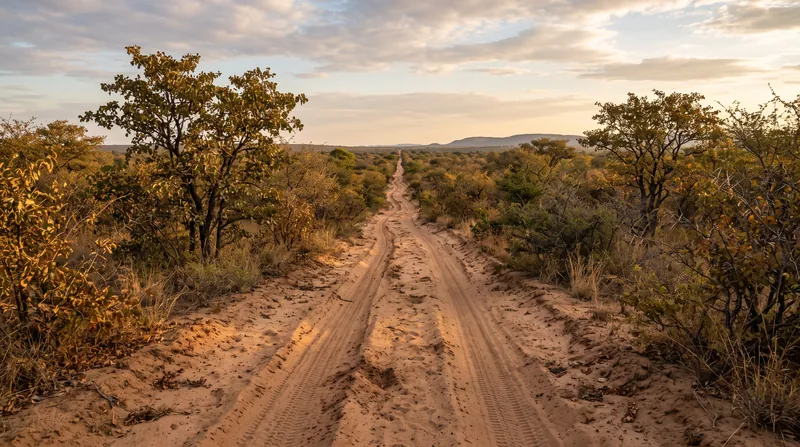
It will happen. Not if, but when. At some point on a Botswana self-drive safari, you will sink into a patch of deep Kalahari sand and your wheels will spin uselessly. Take a breath. Getting stuck in sand is one of the most solvable problems you will face in the bush. Here is exactly what to do.
Step 1: Stop Immediately
The moment your wheels start spinning without forward movement, stop. Do not try to power through. Every second of wheel spin digs your vehicle deeper into the sand. This is the most important rule: stop before you make it worse.
Step 2: Assess the Situation
Turn off the engine and get out. Walk around the vehicle and look at all four wheels. How deep are they? Is the chassis resting on the sand? Which wheels have traction and which are spinning? This assessment determines your recovery approach.
Step 3: Lower Your Tyre Pressures
If you have not already done so, this is your first action. Reducing tyre pressure from the standard 2.2 bar to 1.2 to 1.4 bar dramatically increases the tyre's contact patch with the sand. The tyre spreads out and floats on top of the sand instead of digging in. Use a tyre deflator or simply press the valve core with a stick. Do all four tyres.
Important: remember to reinflate when you reach hard ground. Driving on tar at low pressures will destroy your tyres.
Step 4: Clear Sand from Around the Wheels
Using a shovel or your hands, dig the sand away from the front of each driven wheel. Create a gentle slope upward in the direction you want to move. If the chassis is resting on sand, dig underneath to create clearance. Remove any sand that has built up behind the wheels.
Step 5: Deploy Sand Tracks or Traction Boards
Every properly equipped safari rental comes with sand tracks (also called traction boards or sand ladders). Place them directly in front of the driven wheels, pushed firmly against the tyre. If you have four boards, use all four. If you have two, place them under the rear wheels (on a rear-wheel-drive vehicle) or the front wheels (front-wheel-drive).
Make sure the boards extend far enough ahead that your vehicle can build momentum before it runs off the end of the board.
Step 6: Engage Low Range and Diff Lock
Before attempting to move, engage low range 4x4 and centre diff lock. This distributes power evenly to all four wheels and gives you maximum torque at low speed. Do not use high range. Start in second gear (low range), not first, as this reduces the chance of wheel spin.
Step 7: Drive Out Gently
With a passenger spotting from outside, gently accelerate. The key word is gently. You want steady momentum, not a burst of power. Let the sand tracks do their work. Once you feel the vehicle moving, maintain a steady throttle and do not stop until you reach firm ground.
Step 8: If Sand Tracks Are Not Enough
For deeper bogging, you may need to jack the vehicle. Place the hi-lift jack on a solid base (a flat board or sand track) and lift each stuck wheel high enough to pack sand, sticks, or vegetation underneath. This is slow work but effective.
If another vehicle is present, a tow strap is the fastest recovery method. Attach it to the designated recovery points (not the tow ball) and have the recovery vehicle pull from firm ground.
Prevention Is Better Than Recovery
The best strategy is to lower tyre pressures before you enter sandy areas. If you see tracks from previous vehicles showing deep ruts, deflate proactively. Maintain steady momentum through sandy sections. Do not stop in the middle of a sandy stretch. And always, always carry proper recovery gear.